

Why it matters
When students know they'll be heard, they try.
Younger students deserve sound that works too. Little voices need to be heard, and confidence starts young.
01 / Who benefits
What better sound and vision can mean for your school
These are the outcomes we design for. Every school is different, and results depend on the space and the system.
Students
- Hear and understand instructions and performances
- Feel more confident speaking and performing
- Take part in assemblies and school activities
- Clear speech can support English learners
Teachers
- Be heard without straining your voice
- Simple controls, less troubleshooting
- Videos and presentations that just work
- Teach in more places, indoors and out
Administrators
- Smoother assemblies and events
- Fewer repeat repairs on aging equipment
- Support for accessibility needs
- Staff who can run events independently
Families
- Hear their children at concerts and shows
- Clearer parent meetings and orientations
- Better graduations and award nights
- More welcoming community events
02 / Know the difference
Auditorium sound is not intercom.
Both carry sound, but they're engineered for completely different jobs. Treating one like the other is one of the most common — and costly — mistakes in school projects.
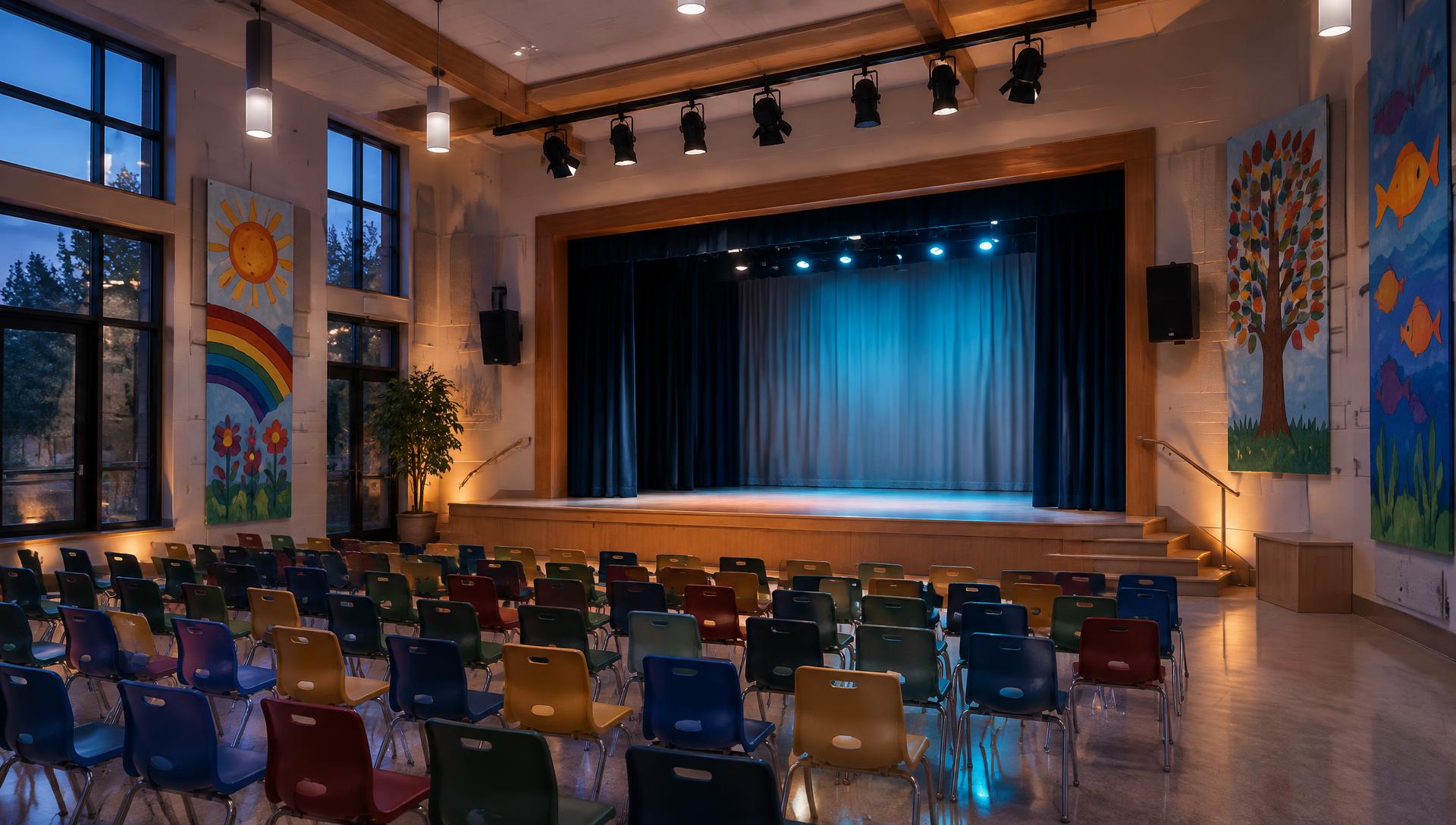
Auditorium sound systems
- — Built for music, theater and speech in one room
- — Even coverage and natural, full-range sound
- — Mixing, microphones and stage integration
- — Operated during events by staff or students
Intercom & public announcement
- — Built for campus-wide messages and alerts
- — Many zones: classrooms, halls, outdoor areas
- — Prioritizes reach and reliability over fidelity
- — Often tied to bells, schedules and building systems